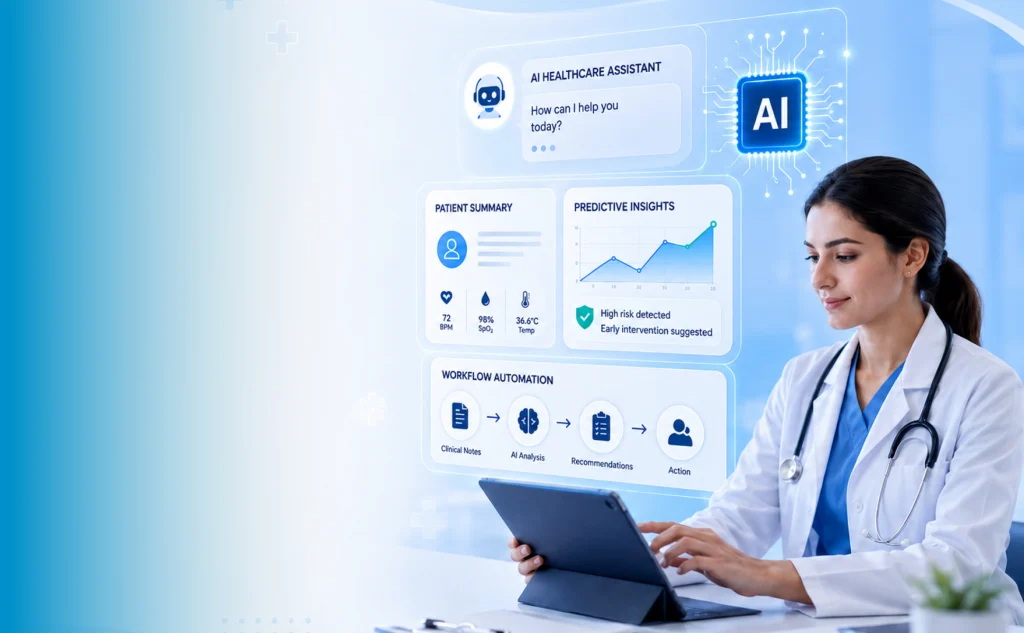
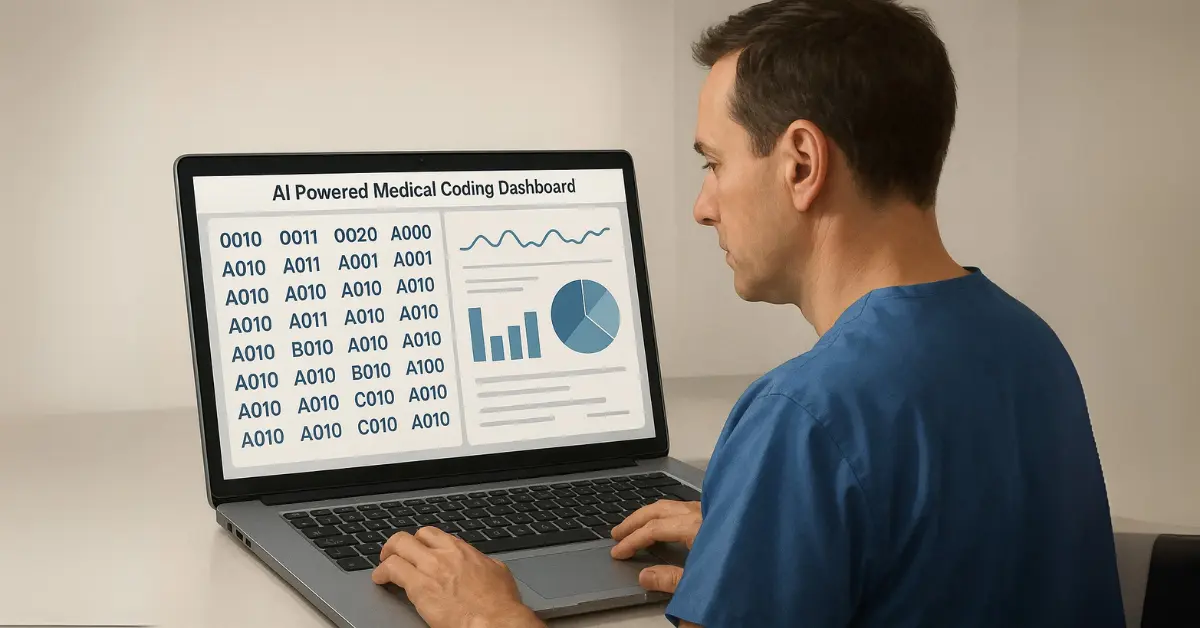
Key takeaways: AI medical coding uses NLP, machine learning, and computer-assisted coding (CAC) to automate ICD-10 and CPT code assignment, reducing coding errors by up to 40%, cutting claim denials by up to 50%, and delivering measurable ROI across healthcare revenue cycle management.
The healthcare industry continues to evolve rapidly, driven by technological advancements that aim to enhance patient care, optimize operational workflows, and improve the financial health of healthcare organizations. Among these breakthroughs, artificial intelligence (AI) is playing an increasingly transformative role in medical coding, and the results are measurable.
As of mid-2026, AI-powered tools are reshaping the way healthcare organizations approach medical coding, billing, and revenue cycle management (RCM). This article examines how AI is transforming medical coding, the key technologies driving this transformation, and the practical implications for medical coders, HIM professionals, and healthcare executives.
of medical bills contain at least one coding error
of claim denials are caused by coding issues
reduction in coding errors with AI-powered systems
of hospitals already use AI in their revenue cycle
What Is AI Medical Coding?
AI medical coding is the use of artificial intelligence, specifically natural language processing (NLP), machine learning (ML), and predictive analytics, to automatically translate clinical documentation into standardized alphanumeric codes used for billing, insurance claims, and health data reporting.
Medical coding is the process of converting healthcare diagnoses, procedures, services, and equipment into universal codes drawn from systems such as:
- ICD-10-CM/PCS International Classification of Diseases, 10th Edition, is used to classify diagnoses and inpatient procedures.
- CPT (Current Procedural Terminology) codes for outpatient procedures and physician services.
- HCPCS Level II codes for supplies, equipment, and services not covered by CPT.
Traditionally, this has been a labor-intensive, error-prone process requiring certified coders to manually review physician notes, discharge summaries, and electronic health records (EHRs). AI medical coding automates this workflow, dramatically reducing manual effort while improving accuracy and coding compliance.
Key AI Technologies Driving Medical Coding Automation
1. Natural Language Processing (NLP) in Medical Coding
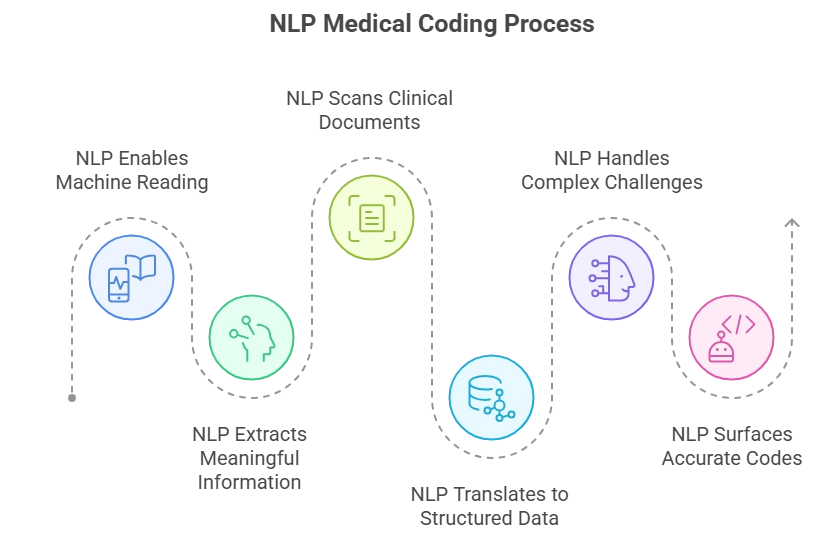
Natural language processing is the backbone of AI medical coding. NLP enables machines to read, interpret, and extract meaningful information from unstructured clinical text, a task that previously required trained human expertise.
In practice, NLP medical coding tools automatically scan physician notes, radiology reports, operative summaries, and EHR entries to identify key clinical terms and translate them into structured, codable data. This significantly reduces the manual burden of sifting through documentation while improving the consistency and accuracy of code assignment.
Advanced NLP systems also handle clinical abbreviations, negation (e.g., “no evidence of pneumonia”), and contextual disambiguation challenges that earlier rule-based coding tools struggled with. Quad One’s AI Medical Coding Application leverages NLP to process complex documentation and surface the most accurate ICD-10 and CPT codes in real time.
2. Computer-Assisted Coding (CAC) and EHR Integration

Computer-assisted coding (CAC) systems use AI algorithms to analyze clinical documentation and suggest appropriate medical codes, functioning as an intelligent co-pilot for human coders. CAC helps coders select the correct ICD-10 and CPT codes, eliminating much of the manual lookup and cross-referencing that slows traditional workflows.
Modern CAC tools integrate directly with EHR platforms and RCM systems, ensuring a seamless flow of information across the healthcare organization. With the ability to process large documentation volumes in real time, CAC enhances coding productivity, reduces claim rejections, and optimizes revenue cycle performance.
3. Machine Learning for Continuous Coding Improvement
Unlike static rule-based systems, machine learning models improve over time. As they are exposed to more clinical data and coding decisions, ML algorithms refine their predictive capabilities learning to recognize patterns that human coders might miss, especially in complex multi-diagnosis or multi-procedure cases.
ML in medical coding enables real-time code suggestions, predicts the likelihood of specific codes being accepted by payers, and identifies anomalies that may indicate documentation gaps or compliance risks. A large hospital system that integrated an ML-driven coding platform reported a 30% reduction in coding errors within the first year of deployment.
4. Predictive Analytics for Denial Management and Compliance
Predictive analytics represents one of the most powerful applications of AI in revenue cycle management. By analyzing historical coding and claims data, predictive models can anticipate which codes are likely to trigger denials, flag documentation deficiencies before claim submission, and identify patterns of non-compliance before they escalate into audits.
For example, AI-driven predictive coding can alert coders to a chronic condition requiring a more specific ICD-10 code, or flag a high-value procedure where documentation does not adequately support medical necessity, both situations that would otherwise result in a denied claim and costly rework.
Benefits of AI in Revenue Cycle Management and Medical Coding
AI-powered medical coding technologies use machine learning to automate the assignment of standardized codes (like ICD-10 and CPT) to patient diagnoses, procedures, and treatments. By analyzing clinical notes, EHRs, and billing data with high accuracy, they reduce errors, speed up reimbursements, ensure compliance, and free coders for complex tasks boosting efficiency in healthcare revenue cycles.
Natural Language Processing (NLP) in Medical Coding
One of the most powerful applications of AI in medical coding is Natural Language Processing (NLP). NLP is a branch of AI that enables machines to comprehend, interpret, and produce human language in a manner that is both meaningful and contextually accurate. In the context of medical coding, NLP is utilized to process and extract relevant information from unstructured clinical data, including physician notes, discharge summaries, and electronic health records (EHRs).
NLP medical coding tools can automatically scan patient records and translate clinical language into standardized codes, significantly reducing the need for manual coding. This not only increases efficiency but also minimizes human error, a common issue in traditional coding methods. The integration of NLP into coding workflows enhances coding compliance, reduces administrative burdens, and ensures that medical billing is accurate and up-to-date with the latest regulations.
Computer-Assisted Coding (CAC)
Another AI-powered technology transforming medical coding is Computer-Assisted Coding (CAC). CAC systems use AI algorithms to analyze clinical documentation and suggest appropriate medical codes based on the data. These systems serve as a form of support for human coders, offering coding suggestions and enhancing coding accuracy. They streamline the process by assisting coders in selecting the correct ICD-10 and CPT codes, which helps eliminate human error while speeding up the entire coding workflow.
CAC tools often integrate with EHR systems and revenue cycle management (RCM) platforms, ensuring a seamless flow of information across healthcare organizations. With the ability to process vast amounts of data in real time, CAC enhances coding productivity, reduces claim rejections, and optimizes revenue cycle management.
Computer-assisted coding benefits healthcare teams by reducing manual code lookup, improving coding consistency, speeding up claims processing, and flagging documentation gaps before submission. For medical practices, CAC is especially useful when coding teams manage high visit volumes, payer-specific rules, and frequent ICD-10 or CPT updates.
Machine Learning and Predictive Analytics in Coding
Machine learning (ML) is another AI technology that has great potential in medical coding. Unlike traditional algorithms that are programmed with specific instructions, ML systems can learn from data over time, improving their predictive capabilities as they are exposed to more clinical data.
In the context of medical coding, machine learning algorithms are trained to recognize patterns in clinical data and predict the most likely codes based on historical coding patterns and clinical guidelines. For example, predictive analytics coding can anticipate and prevent coding errors before they occur, reducing claim denials and ensuring that accurate codes are submitted in a timely manner.
By continuously analyzing past coding data, ML tools can offer real-time suggestions and even predict the likelihood of specific codes being accepted by insurers, helping healthcare organizations avoid costly rework and delays.
The Benefits of AI in Medical Coding
Improved Coding Accuracy and Reduced Error Rates
AI medical coding systems reduce coding errors by cross-referencing clinical documentation against coding guidelines, payer rules, and compliance standards in real time. These systems can identify potential errors before claims are submitted, preventing denials and audit exposure that are expensive to remediate after the fact.
Faster Claims Processing and Reimbursement
By automating the bulk of routine code assignment, AI dramatically shortens the time from patient encounter to clean claim submission. This accelerates reimbursement cycles, improves cash flow, and reduces the accounts receivable (AR) backlog that burdens many coding departments.
Significant Cost Savings and Administrative Efficiency
The reduction in coding errors leads to fewer denied claims, less rework, and reduced appeals costs. Healthcare organizations adopting AI in their revenue cycle report administrative cost reductions of up to 25%, along with a 30% average ROI driven by faster reimbursements and reduced staffing requirements for routine coding tasks.
Enhanced HIPAA Compliance and Audit Readiness
AI coding platforms generate comprehensive audit trails for every code assignment, documenting the clinical evidence, guidelines referenced, and coder decisions. This traceability is invaluable during OIG audits, payer reviews, or Recovery Audit Contractor (RAC) investigations, and is a prerequisite for demonstrating coding compliance..
AI vs. Manual Medical Coding: A 2026 Comparison
| Factor | Manual Coding | AI Medical Coding |
|---|---|---|
| Coding speed | Minutes per chart; bottleneck at high volumes | Seconds per chart; scales instantly |
| Error rate | Up to 80% of bills contain errors | Up to 40% reduction in error rates |
| Claim denial rate | 42% of denials linked to coding issues | Up to 50% reduction in first-pass denials |
| Compliance monitoring | Periodic manual audits, reactive | Real-time, proactive compliance checks |
| ICD-10/CPT updates | Requires manual retraining and guidebook updates | AI models updated continuously with new code sets |
| Scalability | Linear requires more staff for higher volumes | AI models are updated continuously with new code sets |
| Complex cases | ✔ Human judgment essential | AI flags for human review; hybrid model required |
| Audit trail | Manual documentation; incomplete | ✔ Auto-generated, traceable for every code |
| Cost | High labor cost; grows with volume | Upfront integration cost; lower per-encounter cost at scale |
Will AI Replace Medical Coders in 2026?
This is the most common question from coding professionals, and the evidence is clear: AI will not replace medical coders, but it will fundamentally change what they do.
The emerging standard in 2026 is the human-AI hybrid coding model. AI systems autonomously handle high-volume, routine coding tasks, standard office visits, common diagnoses, and straightforward procedures while human coders focus on complex cases requiring clinical judgment, CDI (clinical documentation improvement) queries, denial appeals, and compliance oversight.
According to a 2026 survey, 79% of healthcare professionals believe AI will significantly transform their roles, but the overwhelming consensus is augmentation rather than replacement. Coders who embrace AI tools are becoming more productive and more strategically valuable, shifting from code lookup to coding leadership, audit defense, and quality assurance.
Importantly, regulatory bodies, including the OIG and CMS, continue to insist on human-in-the-loop oversight for AI-generated codes, particularly in high-risk billing areas. This means certified medical coders remain essential to the healthcare revenue cycle for the foreseeable future.
ROI of AI Medical Coding: What the Data Shows
By automating the medical coding process and reducing the reliance on manual labor, AI in medical coding contributes to significant cost savings for healthcare organizations. The reduction in coding errors results in fewer claim denials, less rework, and fewer delays in reimbursement, all of which can lead to reduced administrative overhead and improved operational efficiency.
Furthermore, AI’s ability to analyze clinical data in real time can help identify inefficiencies in coding workflows, leading to streamlined processes and greater cost reduction in the long run. This is particularly important in an era of value-based care, where healthcare organizations are under increasing pressure to deliver high-quality care while controlling costs.
Real-World Applications of AI in Medical Coding
The business case for AI medical coding has moved from theoretical to measurable. Here is what healthcare organizations are reporting in 2026:
average ROI for organizations using AI in revenue cycle
reduction in first pass claim denials
faster documentation and coding turnaround
reduction in administrative overhead costs
One mid-sized hospital that deployed a predictive analytics coding platform eliminated a 10.5-day coding backlog and increased coder productivity by 60% within four months. Another large health system reduced coding errors by 30% after integrating an ML-driven coding platform across its inpatient documentation workflow.
The total addressable savings are substantial: analysts estimate that AI automation across the healthcare revenue cycle could unlock more than $122 billion annually in administrative savings for U.S. providers, the largest share of which comes from smarter, faster medical coding.
How to Implement AI Medical Coding in Your Organization
Assess your current coding workflow and error profile. Audit your first-pass denial rate, coding error rate, AR days, and coder throughput. Identify which encounter types generate the most rework. This baseline determines where AI will have the highest impact and gives you benchmarks to measure ROI.
Select a vendor with proven EHR integration and compliance capabilities. Prioritize AI coding platforms with documented accuracy benchmarks, open APIs for your EHR (Epic, Cerner, eClinicalWorks, etc.), HIPAA-compliant data handling, and a Business Associate Agreement (BAA). Ask for references from healthcare organizations of similar size and specialty mix.
Integrate with your EHR and revenue cycle management platform. Work with your IT and RCM teams to connect the AI coding engine to your document management and billing systems. Define confidence thresholds above which the AI auto-assigns codes and below which a human coder reviews and configures escalation rules for complex or high-value cases.
Train coding staff on AI-assisted workflows and exception review. Upskill coders in reviewing AI-flagged exceptions, using audit dashboards, and applying explainable AI logic to compliance documentation. The transition from manual coding to AI-assisted coding is a cultural shift; leadership buy-in and clear change management are as important as the technology itself.
Looking for AI medical coding software that supports ICD-10, CPT, compliance checks, and audit trails?
Explore QuadOne’s AI ICD Medical Coding solution. ➜Challenges and Considerations for AI Medical Coding Adoption
Data Quality and Training Data Bias
AI models are only as good as the data they are trained on. Inaccurate, incomplete, or historically biased coding data can produce unreliable predictions. Healthcare organizations should audit their historical coding data before training or deploying an AI system, and work with vendors who regularly retrain their models on updated code sets (particularly as ICD-11 adoption approaches).
EHR Integration and Legacy System Compatibility
Many hospitals and practices still operate on older EHR platforms with limited API capabilities. Ensuring that an AI coding tool integrates seamlessly without disrupting existing workflows and without requiring a full EHR replacement is a common implementation challenge. Cloud-based solutions with standardized HL7 FHIR integration have made this significantly easier in 2026.
HIPAA Compliance and Patient Data Security
AI coding systems handle highly sensitive patient health information (PHI). Robust access controls, encryption at rest and in transit, comprehensive audit logging, and a fully executed BAA with the vendor are non-negotiable requirements. Healthcare organizations should also define data retention and deletion policies in alignment with HIPAA and state-specific regulations.
Change Management and Coder Adoption
Shifting from manual to AI-assisted coding requires a cultural change. Coders may be resistant to trusting AI recommendations, particularly early in deployment when the model is still learning organization-specific patterns. Ongoing training, transparent AI logic (“explainable AI”), and visible performance metrics build the confidence needed for broad adoption.
The Future of AI Medical Coding Beyond 2026
As NLP and large language models (LLMs) continue to mature, the future of medical coding is moving toward fully autonomous coding for high-confidence encounter types, with real-time documentation feedback to clinicians, reducing CDI queries and improving documentation quality at the point of care.
Key trends shaping the next phase of AI medical coding include:
- ICD-11 transition readiness: AI systems will be critical in managing the expanded ICD-11 code set, which has over 55,000 unique codes compared to ICD-10’s 14,000.
- Ambient clinical intelligence: AI tools that listen to physician-patient conversations in real time and pre-populate documentation for coding review.
- Predictive revenue cycle analytics: Expanding from coding to broader RCM functions, prior authorization, payer negotiations, and patient financial services.
- Blockchain for coding data integrity: Emerging use of blockchain to create immutable audit trails and improve interoperability across payer and provider systems.
Healthcare organizations that begin their AI medical coding journey now will be best positioned to scale as these technologies mature. For medical coders, the opportunity is not to resist automation but to become the expert layer that oversees, validates, and improves it.
Overcoming Regulatory and Compliance Challenges
As AI technologies in healthcare continue to evolve, regulatory bodies must ensure that AI-powered coding systems comply with existing coding standards, such as ICD-10, CPT, and HCPCS codes. Additionally, Healthcare AI systems must be rigorously tested and validated to ensure that they produce accurate and reliable coding results.
Training and Adaptation for Medical Coders
While AI can significantly enhance coding processes, human coders will continue to be essential for handling complex cases that require clinical judgment. The future of medical coding will likely involve greater collaboration between AI and human coders. Training healthcare professionals to work effectively with AI tools will be crucial for maximizing the benefits of these technologies.
Conclusion: Embracing AI Medical Coding in 2026
AI medical coding is no longer a future promise; it is a present reality delivering measurable results across healthcare organizations of every size. From NLP-powered documentation analysis to ML-driven denial prevention and predictive compliance monitoring, the technologies are mature, proven, and deployable today.
For medical coders, HIM professionals, and revenue cycle leaders, the question is no longer whether to adopt AI medical coding; it is how quickly you can integrate it into your workflows before competitors and peers pull ahead.
Quad One’s AI Medical Coding Application is purpose-built for healthcare organizations seeking to improve coding accuracy, reduce claim denials, and accelerate reimbursements. Our solution integrates seamlessly with your existing EHR and billing infrastructure, backed by certified coding expertise and real-time compliance monitoring.