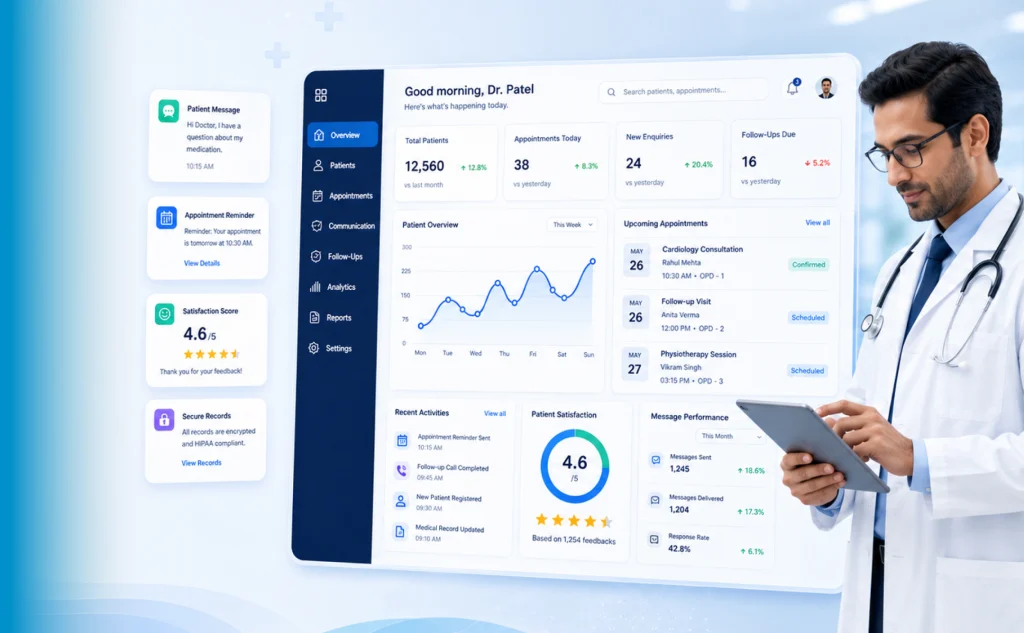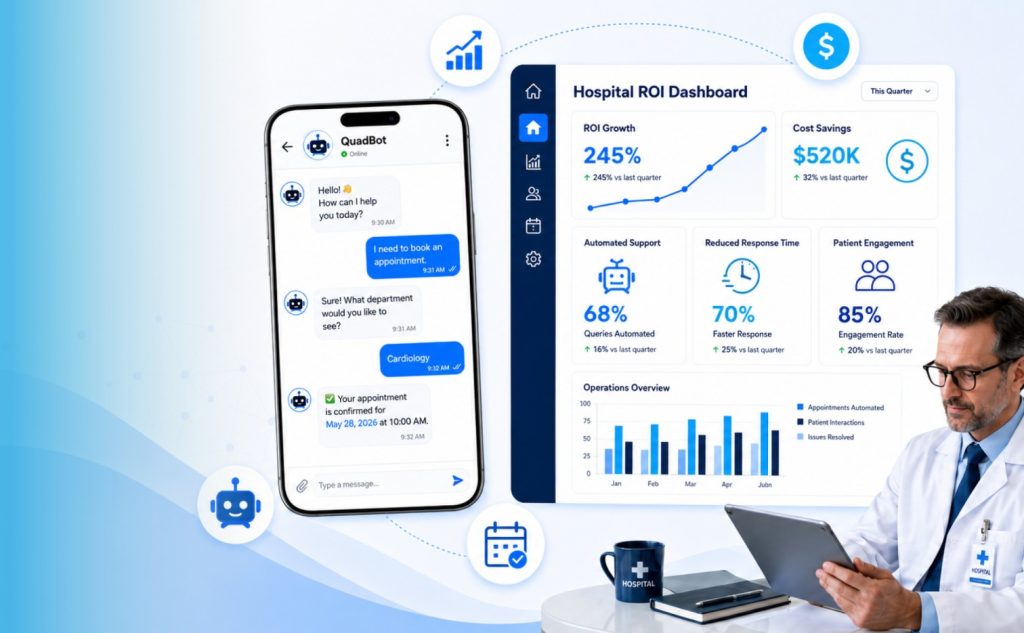

Healthcare lead management ensures that patient inquiries don’t get lost and have a clear path toward appointment booking. While lead generation attracts potential patients, lead management focuses on responding to them, following up, and helping them take the next step.
Missed calls, delayed responses, and inconsistent follow-ups can cost hospitals and clinics potential appointments. Spreadsheets may work for a small number of inquiries, but managing them becomes harder as volumes grow.
A structured process helps teams capture inquiries, assign leads, track progress, and follow up on time. With a healthcare CRM like QuadoneEngage, practices can manage inquiries in one place, track campaign sources, and get better visibility into appointment bookings, making it easier to turn more inquiries into appointments.
Key Takeaways
- Lead generation and lead management serve different purposes: Lead generation attracts potential patients, while lead management helps convert their inquiries into appointments.
- Every inquiry matters: Missed calls, delayed responses, and unrecorded messages can result in lost booking opportunities.
- Clear ownership improves accountability: Assigning each lead to a responsible team member helps ensure timely responses and follow-ups.
- A structured process improves conversions: Capturing inquiries, qualifying patient needs, tracking statuses, and following up consistently helps move leads toward appointments.
- Automation reduces manual effort: Automated reminders and missed-call follow-ups help prevent inquiries from being overlooked.
- Appointment tracking is essential: Measuring bookings, cancellations, and attendance provides a clearer picture of actual conversion performance.
- Campaign tracking supports better decisions: Understanding which channels generate appointments helps healthcare practices evaluate their marketing efforts.
- Spreadsheets have limitations: As inquiry volumes grow, manual tracking can lead to incomplete records, inconsistent follow-ups, and time-consuming reporting.
What Is Healthcare Lead Management?
Lead management is the process of collecting, capturing, organizing, tracking, and nurturing leads throughout their journey. When these processes are tailored specifically to the healthcare industry, they form what is known as healthcare lead management. A lead can be a single person or an entire organization that has shown interest in a healthcare service or a solution.
It could be someone enquiring about an appointment, exploring a treatment, looking for more information, or an organization interested in a healthcare technology solution. The goal is not just to collect these enquiries, but to understand their needs, respond at the right time, and guide them through the next steps.
In healthcare, effective lead management helps ensure that genuine enquiries do not get overlooked. From the first interaction to follow-ups, appointment booking, and eventual conversion, every stage needs to be handled carefully to create a smoother experience for both the healthcare team and the person seeking the service.
Healthcare Lead Generation vs Healthcare Lead Management
Healthcare lead generation and healthcare lead management are two connected but different processes. Healthcare lead generation focuses on attracting potential patients and encouraging them to enquire about a hospital’s services through channels such as websites, social media, ads, and referrals. Healthcare lead management, on the other hand, focuses on what happens after an enquiry comes in, including tracking leads, assigning them to the right team, following up, and helping convert enquiries into appointments. In simple terms, lead generation brings potential patients in, while lead management helps turn their interest into action.
| Area | Lead Generation | Lead Management |
| Purpose | Attract patients and bring in enquiries. | Follow up with patients and turn enquiries into appointments |
| What it involves? | Running ads, improving website visibility, collecting referrals and reviews. | Recording enquiries, assigning them to the right team, following up and tracking progress. |
| Who handles it? | Marketing team | Front desk, call centre, or patient management team. |
| Main Goal | Get more patient enquiries. | Convert more enquiries into appointments. |
| Example | A patient sees a hospital ad and fills out an enquiry form. | The hospital team contacts the patient, answers the questions, books an appointment,t and updates the status. |
For strategies that help healthcare practices attract new inquiries before the lead management process begins, explore our guide on how to get more patient leads for your healthcare practice.
Healthcare Lead Management: How to Turn Patient Inquiries into Booked Appointments
Healthcare lead management helps ensure every patient inquiry gets timely attention and follow-up. By organizing inquiries, assigning responsibilities, and tracking each lead, hospitals and clinics can reduce missed opportunities and make it easier for patients to book appointments.
With a clear process and the right tools, healthcare teams can turn more inquiries into appointments and improve the patient experience.
Why Healthcare Practices Lose Leads After They Come In
Most healthcare practices don’t have a lead generation problem. They have a lead handling problem. Ads run, website forms get filled out, phone calls come in, and patients send messages on WhatsApp. However, somewhere betw een the first inquiry and the final appointment booking, many potential patients drop off.
Patients who reach out to a healthcare provider are often looking for quick answers. They may be comparing two or three hospitals or clinics before deciding where to book. In many cases, they choose the provider that responds first, answers their questions clearly, and makes it easy to take the next step. This is where gaps in lead management can cost healthcare practices valuable appointments.
1. Missed Calls Mean Missed Opportunities
During peak hours, lunch breaks, or after closing time, staff may not be available to answer every call. Patients who don’t get through may not try again. Instead, they move on to another clinic. If the missed call isn’t recorded and followed up on, the inquiry can go unnoticed, and the practice loses a potential appointment without even realizing it.
2. Delayed Responses Push Patients Away
A patient who submits a website form at 10 a.m. but receives a response only at 4 p.m. may have already booked an appointment elsewhere. When patients are actively looking for care, responding promptly helps maintain their interest and gives them a better experience. A slow response can make even an interested patient choose another provider.
3. Unclear Lead Ownership Leaves Inquiries Unattended
When an inquiry comes in, someone needs to be responsible for responding and guiding the patient through the next steps. Without a defined process, the front desk may assume the marketing team will handle it, while marketing expects the call centre to follow up. As a result, the inquiry remains unattended, and the patient may never receive a response.
4. Lack of Follow-Up Leads to Lost Appointments
Even when the first conversation goes well, leads can be lost because of missed follow-ups. A patient might say they will think about booking or ask the team to call them the following week. Without reminders or a structured follow-up process, these conversations can easily be forgotten amid daily responsibilities. A simple reminder system helps teams reconnect with patients at the right time.
5. Scattered Patient Inquiries Make Tracking Difficult
Many practices manage inquiries through a mix of WhatsApp messages, personal phones, and spreadsheets. When patient conversations are stored in different places, tracking them becomes difficult. Staff may struggle to find previous messages or remember the next action required. If an employee is on leave or leaves the organization, important conversations may become inaccessible, affecting continuity and follow-up.
6. Poor Lead Status Tracking Affects Prioritization
Teams need to know whether an inquiry is new, contacted, awaiting a callback, or already converted into an appointment. Without this visibility, staff may spend time on newer inquiries while overlooking patients who are waiting for a response or are ready to book. Tracking each lead’s status helps teams prioritize follow-ups and understand how inquiries move through the booking process.
7. Unknown Lead Loss Reasons Prevent Improvement
Why do some patients inquire but never book? Some may find the consultation fee too high, while others may face scheduling difficulties, location concerns, or limited doctor availability. In some cases, a delayed response may be the reason. When teams don’t record why leads are lost, they miss opportunities to improve their processes and may continue spending on campaigns that generate inquiries without converting them into appointments.
8. Missing Appointment Confirmations Leave Slots Empty
A patient expressing interest or agreeing to a time doesn’t always guarantee they will attend. Without timely confirmations and reminders, patients may forget their appointments or fail to communicate changes. This can leave appointment slots unfilled, affecting both revenue and the practice’s ability to serve other patients. A consistent confirmation process helps patients stay informed and reduces avoidable gaps in the schedule.
9. No Re-Engagement Process Means Lost Future Bookings
Not every patient is ready to book immediately. Some may need more time to decide, while others may be unable to find a suitable appointment slot or may simply get busy. With an appropriate follow-up process, these patients can be contacted again when the timing is better. Without re-engagement, potentially interested patients are forgotten, even when they may be ready to book later.
Turning More Inquiries into Appointments Starts with Better Lead Management
Individually, these gaps may seem small, but together they can significantly affect appointment bookings. A healthcare practice may continue investing in marketing and generating patient inquiries without seeing a corresponding increase in appointments.
The solution isn’t always to generate more leads. It’s to build a better process for capturing, assigning, tracking, and following up on the inquiries the practice already receives. With clear ownership, timely responses, organized communication, and consistent follow-ups, healthcare teams can make it easier for patients to book appointments and get the care they need.
How to Manage Healthcare Leads: 7 Steps from Inquiry to Appointment
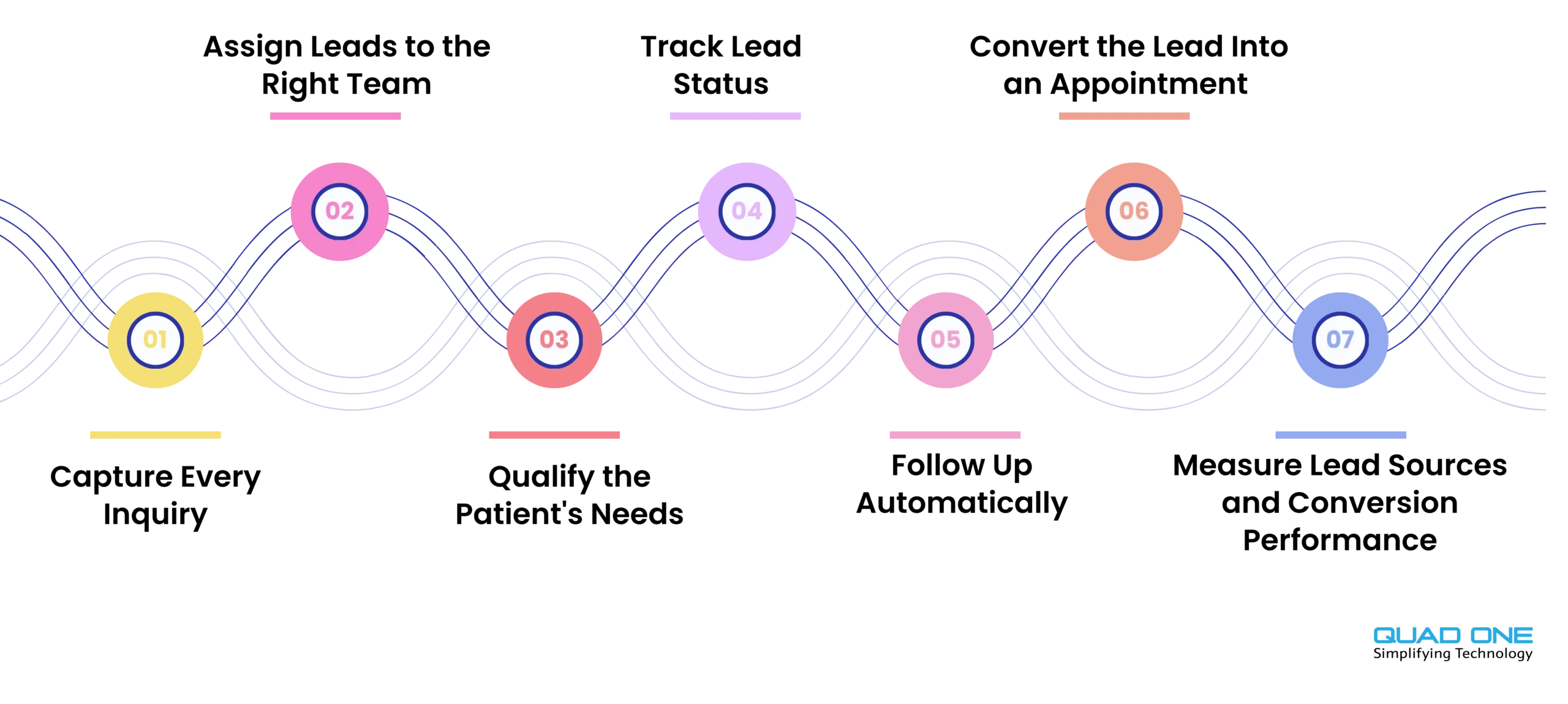
Step 1: Capture Every Inquiry
- Objective: Record every patient inquiry from every channel in one centralized location.
- Sources of patient inquiries:
- Phone calls, including missed and after-hours calls
- Website contact forms and appointment requests
- WhatsApp messages
- Chatbot conversations on websites and messaging apps
- Social media messages and comments
- Campaign landing pages and advertisements
- Walk-ins at the front desk
- Referrals from doctors, existing patients, and partner organizations
- Information to record:
- Patient name and contact details
- Inquiry source
- Date and time of inquiry
- Service or department of interest
- Initial inquiry details
- Expected outcome: No inquiry remains only in someone’s phone, inbox, or memory. Centralized records make lead tracking and follow-up easier.
Step 2: Assign Leads to the Right Team
- Objective: Assign every inquiry to a responsible team member who can guide the patient through the next steps.
- Lead assignment methods:
- By department: Route cardiology inquiries to the cardiology coordinator.
- By location: Assign inquiries to the relevant hospital or clinic branch.
- By specialty: Direct specialized service inquiries to trained staff.
- By doctor preference: Route requests for a specific doctor to the appropriate scheduler.
- By urgency: Prioritize time-sensitive inquiries for prompt attention.
- By source: Assign campaign-generated leads to the relevant team.
- Best practices:
- Assign one clearly identified owner to every lead.
- Define responsibilities for responding and following up.
- Set response-time expectations for the team.
- Reassign leads when the responsible staff member is unavailable.
- Expected outcome: Reduced confusion, better accountability, and timely responses to patient inquiries.
Step 3: Qualify the Patient’s Needs
- Objective: Understand what the patient needs and guide them toward a suitable appointment.
- Key details to capture:
- Service required: Consultation, diagnostic test, procedure, follow-up, or second opinion.
- Preferred location: Hospital branch, clinic, or telemedicine option.
- Urgency: Whether the patient needs routine or prompt attention, with urgent concerns directed through the appropriate clinical process.
- Insurance or payment preferences: Relevant payment arrangements or insurance requirements.
- Preferred appointment time: Suitable dates and times for the patient.
- Doctor preference: Whether the patient wants to consult a particular doctor.
- Benefits of qualification:
- Directs inquiries to the appropriate team.
- Makes appointment scheduling easier.
- Reduces repeated questions during follow-ups.
- Helps staff provide relevant information.
- Improves the patient experience.
- Expected outcome: A clearer understanding of patient requirements and an easier booking process.
Step 4: Track Lead Status
- Objective: Identify where every inquiry stands and determine the next action required.
- Recommended lead statuses:
- New: Inquiry recorded but not yet contacted.
- Contacted: Initial communication completed.
- Callback scheduled: Patient requested a follow-up at a specific time.
- Booked: Appointment confirmed.
- No answer: Contact attempts made, but the patient has not responded.
- Not interested: Patient declined to proceed.
- Closed: Inquiry completed, with the outcome or reason recorded.
- Best practices::
- Keep status options simple and consistent.
- Define what each status means.
- Update the status after every important interaction.
- Record the next action and follow-up date.
- Document reasons for lost or closed leads.
- Expected outcome: Better visibility into pending inquiries, overdue follow-ups, conversion gaps, and reasons patients do not book.
Step 5: Follow Up Automatically
- Objective: Maintain consistent communication and prevent interested patients from being overlooked.
- Follow-up channels:
- WhatsApp: Answer questions, share appointment details, and send confirmations.
- SMS: Deliver short reminders, updates, and relevant links.
- Phone calls: Address complex questions or provide additional assistance.
- Staff reminders: Alert team members when callbacks are due or inquiries remain unattended.
- Missed-call recovery: Create a follow-up task or send an appropriate response after an unanswered call.
- Effective follow-up practices:
- Respond promptly to new inquiries.
- Schedule callbacks based on patient preferences.
- Send reminders when a lead remains inactive.
- Personalize messages according to the patient’s inquiry.
- Respect communication preferences and applicable consent requirements.
- Avoid excessive or repetitive messages.
- Example: “We missed your call. Would you like help booking an appointment?”
- Expected outcome: Better follow-up consistency, recovered missed opportunities, and improved chances of converting inquiries into appointments.
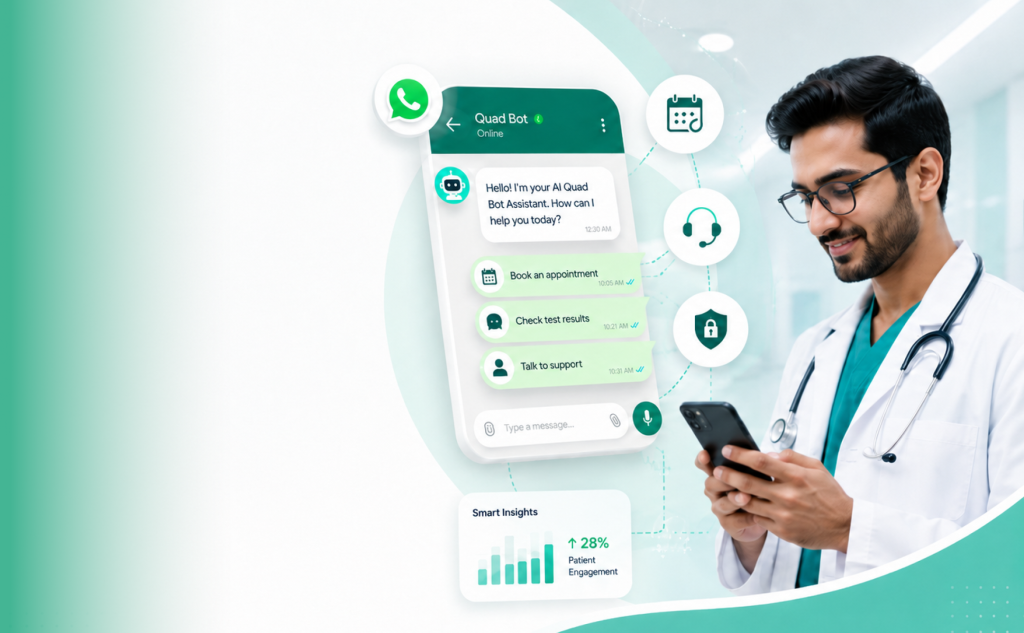
An AI WhatsApp bot for healthcare can support appointment inquiries, confirmations, reminders, and routine patient communication, with human assistance when needed.
Step 6: Convert the Lead Into an Appointment
- Objective: Turn patient inquiries into bookings and track whether patients attend their appointments.
- Key activities:
- Booking: Offer suitable appointment slots and simplify scheduling.
- Confirmation: Send the confirmed date, time, location, and other relevant details.
- Reminder: Send a timely reminder before the appointment.
- Rescheduling: Make it easy for patients to reschedule when needed.
- Show-up tracking: Record whether the patient attended, cancelled, or did not show up.
- Metrics to monitor:
- Number of inquiries converted into appointments
- Number of confirmed appointments
- Appointment cancellation rate
- Patient no-show rate
- Percentage of booked patients who attend
- Expected outcome: A better journey from inquiry to attended appointment and improved visibility into avoidable no-shows.
Step 7: Measure Lead Sources and Conversion Performance
- Objective: Evaluate lead management performance, identify gaps, and determine which improvements are needed.
- Key performance questions:
- Which campaigns and channels generate the most inquiries?
- Which sources generate the most booked appointments?
- How quickly does the team respond to new inquiries?
- What percentage of inquiries convert into appointments?
- How many leads remain uncontacted or require follow-up?
- What are the most common reasons patients do not book?
- Which campaigns generate appointments that patients actually attend?
- Important metrics to track:
- Lead volume: Total inquiries received during a given period.
- Response time: Time taken to respond to an inquiry.
- Contact rate: Percentage of leads successfully contacted.
- Lead-to-appointment conversion rate: Percentage of inquiries that result in bookings.
- Appointment attendance rate: Percentage of booked appointments attended.
- Lost lead rate: Percentage of leads that do not convert.
- Source-wise conversion: Appointment performance by marketing channel or campaign.
- Expected outcome: Better follow-up processes, clearer campaign performance, and more informed marketing and operational decisions.
Benefits of Healthcare Lead Management
Faster Inquiry Response and Fewer Missed Leads: Helps teams respond to patient enquiries on time, so potential patients don’t slip through the cracks. By keeping enquiries organized in one place, staff can easily identify new requests, respond faster, and ensure patients don’t have to wait too long for a reply.
Better Lead-to-Appointment Conversion: Makes it easier to follow up with patients and turn more enquiries into confirmed appointments. Timely responses, appointment details, and reminders help patients move forward with their bookings instead of losing interest or choosing another healthcare provider.
Greater Accountability Across Front Desks and Call Centers: Helps teams track who handled each enquiry, whether a response was sent, and which follow-ups are pending. This makes it easier for managers to identify delays, understand where enquiries get stuck, and ensure every patient receives the attention they need.
Reduced Manual Follow-up Effort: Reduces the time staff spend calling and messaging patients repeatedly. Automated reminders, appointment updates, and follow-up messages handle routine communication, allowing staff to focus on patient queries and other important tasks.
Clearer Campaign Performance and Conversion Visibility: Shows which campaigns bring in patient enquiries and how many of them turn into appointments. This helps healthcare providers understand what works, identify where potential patients drop off, and make better decisions about their marketing efforts.
Why Spreadsheets and Manual Follow-Ups Are Not Enough
Limited scalability: Spreadsheets and manual follow-ups may work for small clinics with a few daily inquiries, but become difficult to manage as lead volumes grow.
Incomplete lead records: Inquiries may be recorded late, entered incorrectly, or missed entirely.
Scattered information: Different team members may maintain separate records, making it difficult to access accurate, up-to-date information.
Missed follow-ups: Without automated alerts and reminders, leads can remain unattended or depend on staff remembering to call back.
Time-consuming reporting: Teams spend hours organizing data and correcting records, making it harder to trust and analyze reports.
Data security challenges: Patient information stored across multiple spreadsheets and personal devices can be difficult to secure and audit.
Limited visibility: Manual tracking makes it harder to connect patient inquiries with appointment bookings and the marketing campaigns that generated them.
For hospitals connecting inquiry management with clinical and scheduling systems, our EHR-CRM integration guide explains the data flows and integration considerations.
How Healthcare CRM Improves Lead Management
healthcare CRM gives teams a clearer view of patient enquiries and their progress in the booking process. Instead of relying on manual tracking, staff can easily identify which patients need a response, which require follow-ups, and which have confirmed appointments. Here are a few key factors to consider when understanding how a healthcare CRM improves lead management.
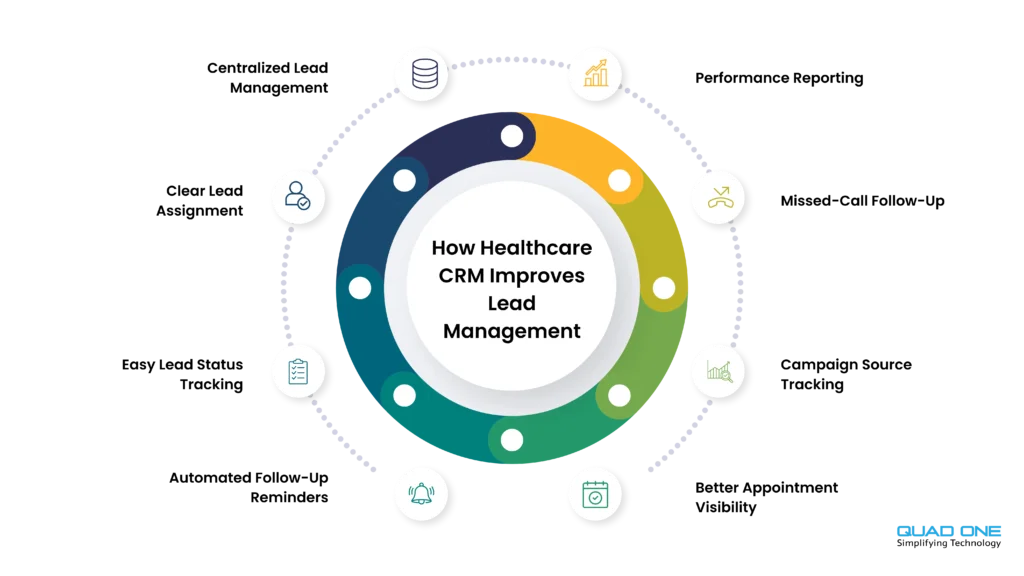
Easy Lead Status Tracking
Teams can track each inquiry through defined statuses, making it easier to identify new leads, pending callbacks, confirmed appointments, and inquiries that need attention.
Campaign Source Tracking
Each lead’s source can be tracked to help identify which marketing campaigns and channels generate inquiries and appointments. This gives healthcare practices a clearer understanding of their campaign performance.
Performance Reporting
Response times, conversion rates, lead sources, and reasons for lost leads can be racked in one place. These reports help healthcare teams identify gaps and make informed decisions.
If you’re evaluating CRM capabilities, our healthcare CRM software guide explains the features, integrations, and selection criteria hospitals should consider.
How QuadOne Helps Healthcare Practices Manage Leads Better
QuadOne Engage helps healthcare practices manage patient inquiries from different channels through one connected CRM workflow. Calls, WhatsApp messages, website forms, chatbot conversations, and social media enquiries can be brought into one place, making it easier for teams to assign leads, track their status, and follow up until an appointment is booked.
For hospitals and clinics, this provides better visibility into the patient journey, from the first inquiry to appointment booking. By keeping inquiries organized and follow-ups on track, QuadoneEngage helps teams reduce missed opportunities, improve response times, and manage leads more effectively.
It also helps teams understand what happens after a patient inquiry. They can see which leads need attention, which patients have booked appointments, and where follow-ups are still pending. This makes it easier for staff to stay on top of their daily work and ensure that patients receive timely responses instead of being left waiting.
Conclusion
Effective healthcare lead management is about more than collecting patient inquiries. It is about ensuring that every inquiry receives attention, every follow-up happens on time, and every opportunity to book an appointment is handled effectively. Without a structured process, healthcare practices risk losing potential patients even when their marketing efforts generate sufficient inquiries.
By adopting a clear lead management workflow and using healthcare CRM tools such as QuadoneEngage, practices can reduce missed opportunities, improve team productivity, track campaign performance, and create a better patient experience. Ultimately, the goal is not simply to generate more leads, but to convert existing inquiries into meaningful patient appointments through timely communication, consistent follow-ups, and better visibility across the entire process.