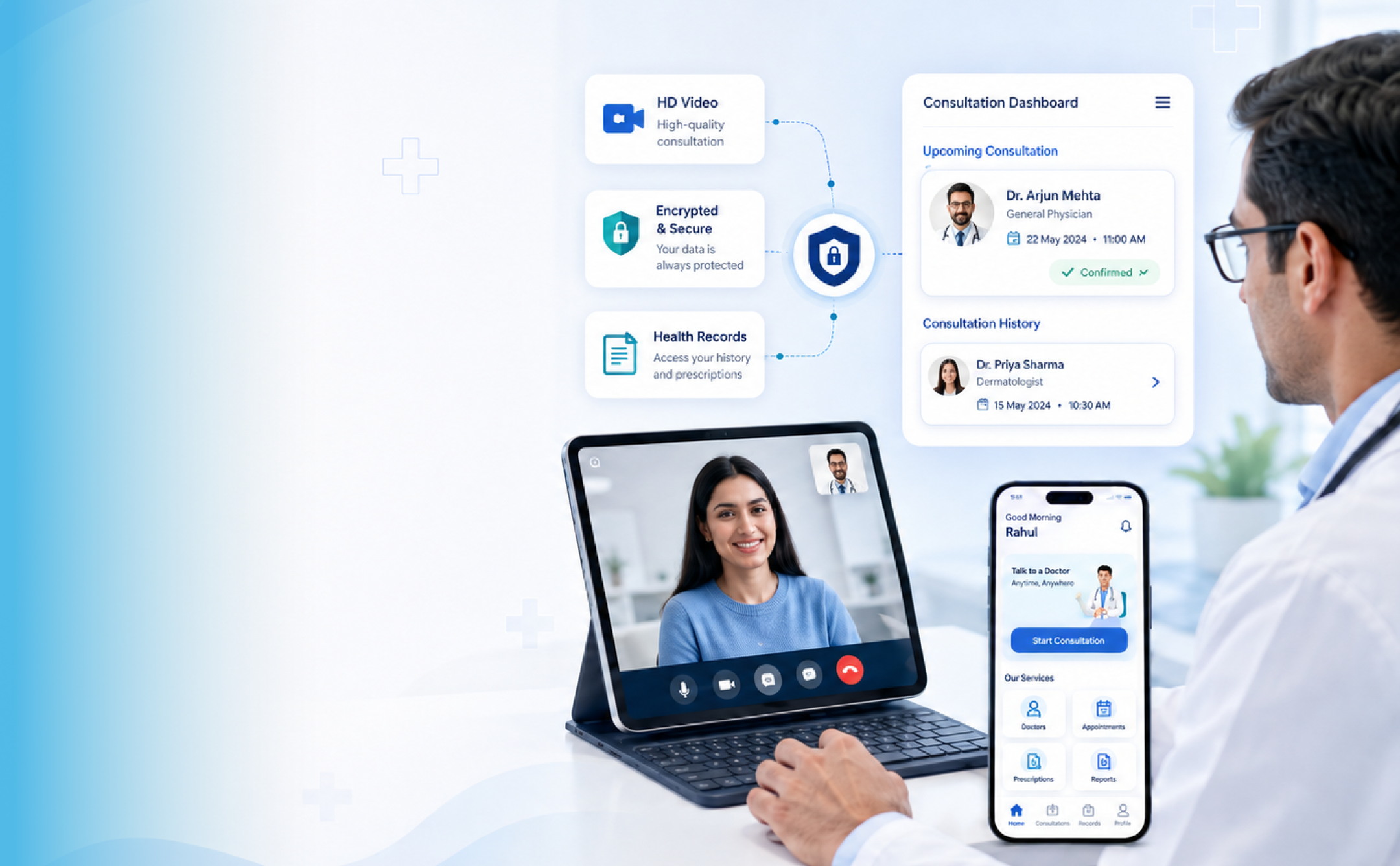
The rise of telemedicine has significantly transformed healthcare by making care more accessible, efficient, and patient-centered. What began as a supplementary service has now become a core part of modern healthcare, especially accelerated by the COVID-19 pandemic. With the integration of artificial intelligence, e-consultation platforms have evolved into intelligent systems that support real-time patient interaction, symptom triage, appointment scheduling, and follow-ups.
AI-powered telemedicine enhances both patient experience and clinical efficiency. It reduces administrative workload, enables better data management, and allows healthcare providers to focus on high-value tasks. These platforms also improve accessibility by supporting multiple languages, assisting low-tech users, and reaching patients in remote areas. Seamless integration with electronic health records ensures continuity of care and more informed decision-making.
The successful adoption of telemedicine also relies on robust healthcare website development. Healthcare websites serve as the primary digital gateway to virtual care by enabling secure patient access, online appointment scheduling, video consultations, and mobile-friendly experiences. Together, these features improve accessibility, enhance patient engagement, and support the efficient delivery of telemedicine services.
Telemedicine and the rise of online consultations
Telemedicine and online consultations have rapidly transformed how healthcare is delivered, making medical support more accessible and convenient than ever before. With the help of digital platforms, patients can now connect with doctors remotely for
diagnosis, follow-ups, and even ongoing treatment without the need for in-person visits.
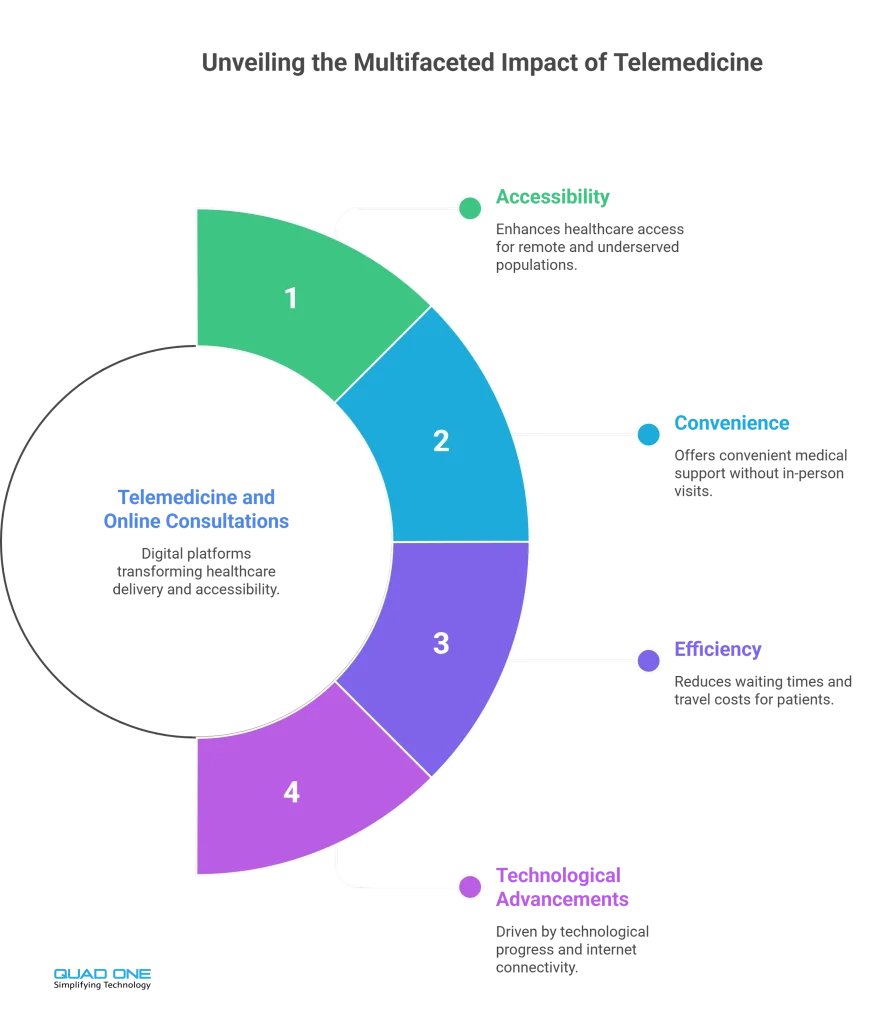
This shift has been driven by advancements in technology, increased internet access, and the growing demand for faster, more flexible care. Telemedicine not only helps reduce waiting times and travel costs but also plays a crucial role in reaching patients in remote or underserved areas. As healthcare continues to evolve, online consultations are becoming an essential part of modern care delivery.
What is Telemedicine?
Telemedicine is a way to get all your medical care needs met using technology such as phone calls, video calls, or mobile apps. It enables patients to connect with healthcare professionals remotely, making it easy to discuss symptoms, seek medical advice, receive diagnoses, and even get prescriptions without needing to visit a hospital or clinic in person.
Beyond basic consultations, telemedicine also supports follow-up care, routine check-ups, mental health services, and the management of chronic conditions like diabetes or hypertension. It helps reduce travel time, lowers healthcare costs, and improves access for people in remote or underserved areas.
Advantages of Telemedicine :
Telemedicine has played a significant role in making healthcare more efficient and convenient for both patients and providers. It helps reduce long waiting hours at hospitals and clinics, allowing patients to connect with doctors quickly and get timely medical advice without the hassle of travel. This not only saves time but also makes it easier for people to fit healthcare into their daily lives.
Patients can reach out to doctors as soon as they notice symptoms, which leads to faster diagnosis and early treatment. This quick access can make a real difference, especially in preventing minor issues from becoming serious health problems.
In many platforms, voice assistants in healthcare appointment booking also make it easier for patients to schedule or reschedule visits using simple voice commands, adding another layer of convenience.
Challenges and Limitations of Online Consultations
Telemedicine has definitely made some remarkable strides, but it also comes with its own set of limitations. One of the main challenges is the lack of physical examination, which can make it difficult for doctors to accurately diagnose certain conditions that require hands-on assessment or diagnostic tests.
Another limitation is the dependence on technology. Not everyone has access to a stable internet connection, smartphones, or the digital skills needed to use telehealth platforms effectively. This can create a gap, especially among elderly patients or those in underserved communities.
There are also concerns around data privacy and security, as sensitive medical information is shared online. In addition, some patients may feel that virtual consultations lack the personal touch and reassurance of face-to-face interactions with their doctors.
| Aspects | Telemedicine (Online Consultations) | In-Person Consultations |
| Accessibility | Easy access from anywhere with internet | Requires travel to the hospital |
| Time Efficiency | Saves time, no waiting in long queues | Often involves waiting time and travel |
| Physical Examination | Not possible or limited | Full physical check-up possible |
| Convenience | Highly convenient, can consult from home | Less convenient, requires scheduling and travel |
| Cost | Usually lower (no travel or related expenses) | Higher due to travel, time, and hospital costs |
| Personal Interaction | Less personal, virtual communication | More direct and personal interaction |
The Role of Online Consultations in the Future of Healthcare
Online consultations are shaping the future of telemedicine and key healthcare trends by making care more connected and patient-focused. People no longer have to depend only on physical visits. People no longer have to depend only on physical visits to get medical help; they can speak to a doctor anytime, from anywhere. This flexibility is especially helpful for those with busy schedules, limited mobility, or living in areas where healthcare facilities are not easily accessible. It brings a sense of comfort and ease, knowing that medical support is just a call or click away.
As healthcare continues to evolve, online consultations will become a natural part of everyday care. They will help doctors stay connected with patients even after treatment, ensuring better follow-ups and ongoing support. While hospitals and clinics will always remain important, virtual care will act as a strong support system, making healthcare faster, more efficient, and more responsive to people’s needs.
Conclusion:
Healthcare delivery has evolved rapidly in recent years, with telemedicine and online consultations playing a key role in making care more accessible and adaptable to modern lifestyles. From quick virtual consultations to AI-powered support systems, this shift has brought care closer to patients, breaking down barriers like distance, time, and availability. It has not only improved patient convenience but also allowed healthcare providers to work more efficiently and focus on delivering quality care.
While there are still challenges such as limited physical examinations, technology gaps, and data security concerns, the overall impact of telemedicine remains highly positive. As technology continues to advance, these limitations are likely to be addressed, making virtual care even more reliable and inclusive. In the coming years, telemedicine will not replace traditional healthcare but will work alongside it, creating a balanced, hybrid model that ensures better access, continuity, and quality of care for everyone.