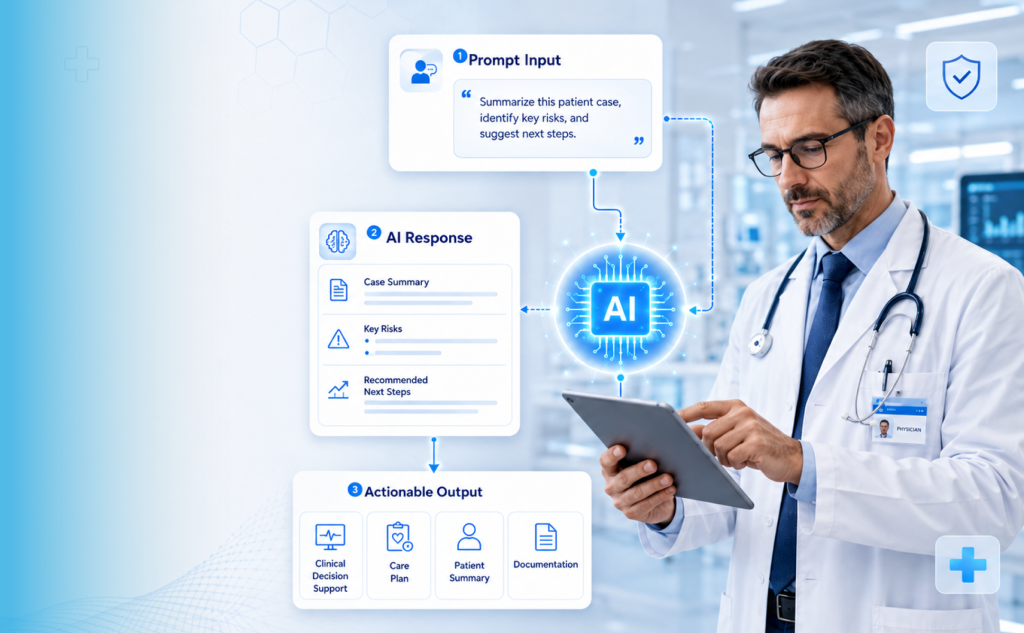
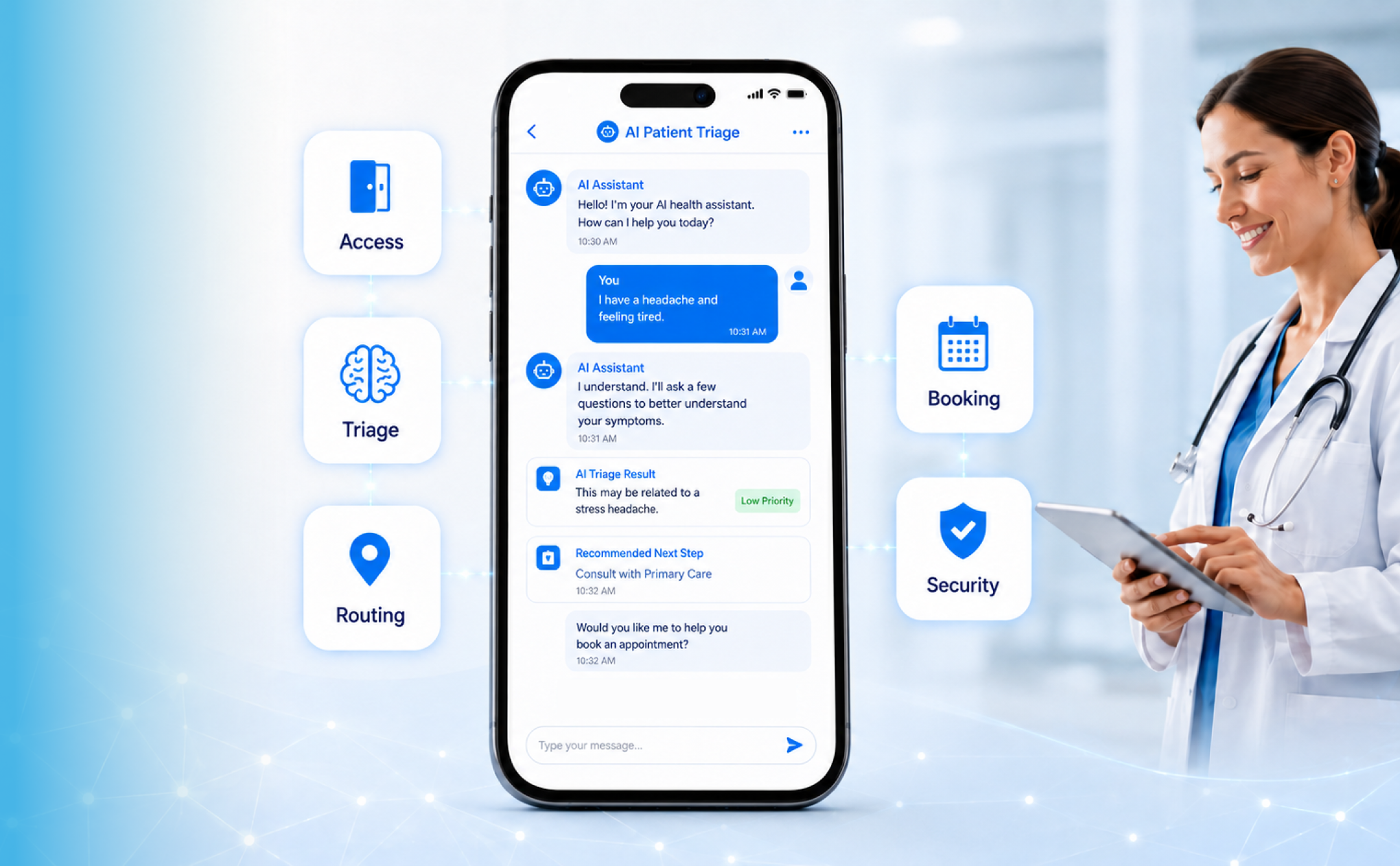
More than simply prioritizing patients, AI triage helps close the gap between what patients think they need and what their symptoms may actually require. This can improve patient access, support better care navigation, reduce avoidable visits, and help healthcare organizations use their resources more effectively.
Key Takeaways
- AI triage goes beyond symptom assessment: It evaluates patient concerns and helps determine the appropriate level of care.
- Patient intent matters: What a patient asks for does not always match what they clinically need. AI can help identify this gap.
- Better patient access: AI can guide patients toward the right department, provider, or care setting without making them navigate the system alone.
- Improved care navigation: Patients can be directed toward primary care, urgent care, emergency services, virtual care, or routine appointments based on their needs.
- Reduced operational pressure: AI triage can reduce unnecessary visits and repetitive triage work, allowing healthcare teams to focus on more complex cases.
- More efficient call centers: AI can support initial information collection and routing, reducing routine workload and waiting times.
- Potential for greater equity: Digital triage can give patients a more accessible way to receive initial guidance, regardless of when they seek help.
- The bigger picture: AI triage connects patient intent with appropriate care, creating a more accessible, responsive, and efficient healthcare journey
What is AI-driven Patient Triage
AI Triage is a process of using Artificial Intelligence to assess patient needs, determine the urgency of their condition, and identify the appropriate next step in their care journey. It analyzes information such as symptoms, medical history, patient-reported concerns, and other relevant data to categorize patients based on the level of attention they may require.
Based on this assessment, AI triage can help determine who needs immediate medical attention, who should be seen soon, and who can be directed toward routine care or self-care guidance. It can also help route patients to the appropriate department, healthcare professional, or care pathway.
Why AI triage is essential for modern patient engagement
Patient care remains at the heart of the healthcare process, making it essential for healthcare organizations to understand and respond to patient needs at every stage of their journey. AI patient triage supports this patient-centric approach by using artificial intelligence to assess patient concerns, determine urgency, and guide patients toward the right care at the right time.
With AI triage in healthcare, patient queries and concerns can be assessed based on individual needs rather than following a one-size-fits-all approach. Patient triage AI can help identify cases that require immediate attention, those that need timely consultation, and those that can be directed toward routine care or self-care guidance.
This AI-driven triage approach can also improve patient access by helping individuals reach the appropriate department, healthcare professional, or care pathway more efficiently. Instead of navigating complex healthcare systems on their own, patients can receive timely direction based on their reported symptoms and needs.
Why Patient Intent Matters More Than Ever
Patient intent is about understanding what a patient needs or wants when they interact with a healthcare provider or digital platform, from booking an appointment to seeking guidance or finding the right department. Identifying this intent early helps healthcare organizations respond faster, personalize interactions, and direct patients to the right care pathway.
1. Clinical & Operational Risks
When patients guess wrong about where to go showing up at the ER for something urgent care could’ve handled, or staying home when they actually need emergency attention the ripple effects hit everyone. Care teams end up managing a mismatch between what patients think they need and what their symptoms actually indicate, and that gap creates real clinical risk alongside operational strain.
2. Financial Impact
Misrouted care is expensive care. Unnecessary ER visits inflate costs for health systems, payers, and patients alike, while missed opportunities to redirect patients toward lower-cost, appropriate settings leave savings on the table that better intent-matching could capture.
3. Health Equity
Not everyone has the same access to guidance about where to seek care. Patients without a regular primary care relationship, or those navigating language and literacy barriers, are more likely to default to the ER simply because it’s the option they know, which means intent-aware tools can help close access gaps rather than widen them.
From Symptoms to Action: The Impact of AI Triage
The data highlights the impact of AI triage. Clearstep’s research found that 73% of patients were redirected to a care setting different from what they initially intended, with 67% of those patients directed to lower-acuity care. A related peer-reviewed study on virtual triage found that, across five serious conditions, 38.5% of patients whose results indicated an emergency-level issue had not
initially planned to see a doctor. This highlights the real value of AI triage; it can identify the gap between what patients think they need and what their symptoms may actually require, helping guide them toward the appropriate level of care.
AI Triage: Connecting Patients to the Right Care
AI triage acts as a bridge between what patients experience and how healthcare providers respond. It helps assess patient concerns, understand the urgency of their symptoms, and guide them toward the most appropriate care.
For patients, this means faster guidance, easier access, and less confusion about what to do next. Instead of navigating multiple departments or waiting for answers, they can be directed toward the right type of care based on their needs.
For healthcare providers, AI triage helps prioritize patients, reduce unnecessary visits, and manage resources more effectively. By connecting patients with the right care at the right time, it creates a smoother and more efficient healthcare experience for everyone.
What It Means for Patients
AI triage can help patients:
- Get answers faster without waiting on hold or searching endlessly online.
- Understand what to do next, whether that means home care, a virtual consultation, or an in-person visit.
- Reach the right care sooner by directing them to the appropriate department or provider.
- Feel more confident about their next step instead of second-guessing their symptoms.
What It Means for Healthcare Providers
For healthcare organizations, AI triage can help:
- Reduce unnecessary ER and specialist visits.
- Route lower-acuity cases to more appropriate care options.
- Reduce repetitive calls and routine triage work.
- Help staff focus on patients who need more immediate attention.
- Improve the overall flow of patients through the healthcare system.
Making Patient Access Easier
Patients do not always know where to go, whom to contact, or how urgent their symptoms are. AI triage can simplify this first step by providing guidance when patients need it.
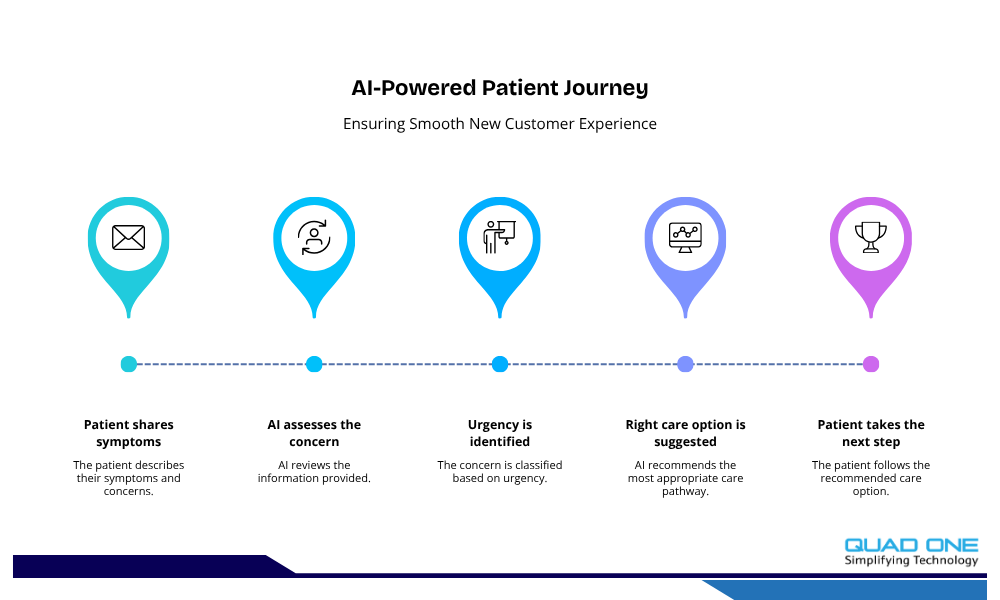
This can help patients:
- Get initial guidance without waiting on a call.
- Understand whether their concern needs immediate or routine attention.
- Find the right department or type of care.
- Avoid unnecessary visits or delays.
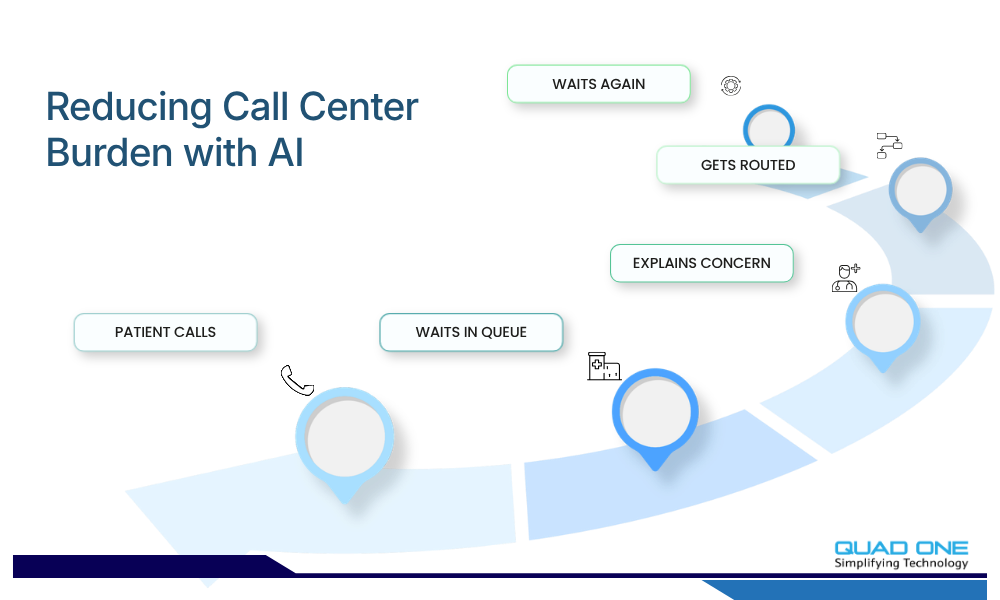
Reducing Call Center Burden with AI
Call centers handle everything from appointment requests to symptom-related questions. AI triage can manage the initial, routine part of this process and bring human staff in when needed.
AI-supported flow:
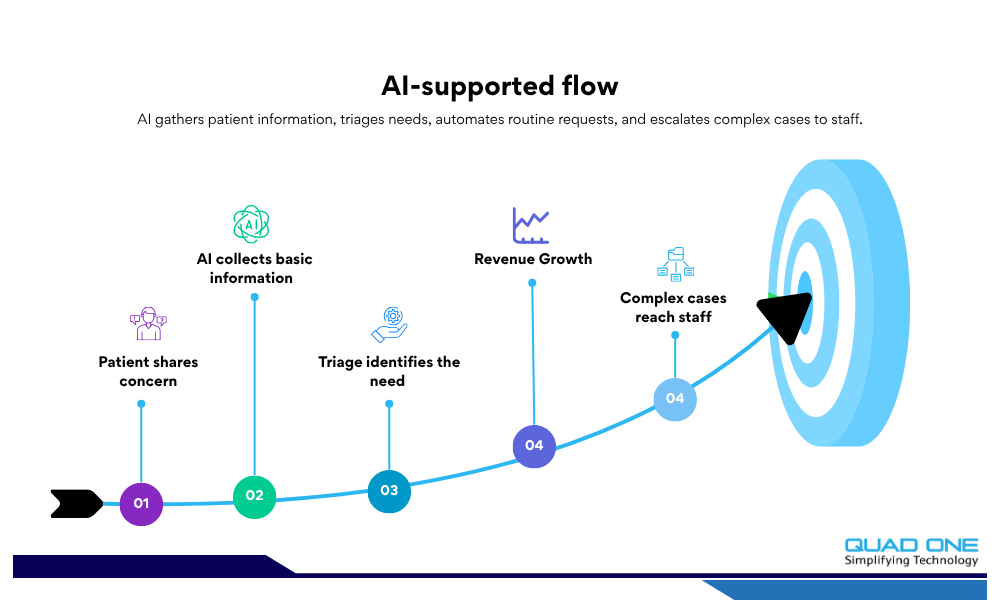
This helps:
- Reduce repetitive calls.
- Shorten waiting times.
- Reduce the workload on call center teams.
- Give staff more time for complex patient conversations.
Bridging Patient Intent and Care
What a patient asks for is not always what they actually need.
For example:
- A patient asks for a specialist appointment → AI triage may identify that primary care is the better first step.
- A patient wants to wait and monitor symptoms → AI triage may flag signs that require urgent medical attention.
- A patient is unsure which department to contact → AI triage can help direct them to the appropriate care pathway.
This is where AI triage adds value. It helps bridge the gap between patient intent and appropriate care, making the healthcare journey simpler for patients and more efficient for providers.
Transform Digital Patient Engagement with Clearstep
Clearstep helps healthcare organizations make patient engagement more accessible, personalized, and responsive. By using AI-powered triage, patients can get guidance based on their symptoms and concerns, helping them understand what type of care they may need and where to seek it.
With a more intelligent approach to patient access, healthcare organizations can reduce unnecessary friction, connect patients to the right care pathways, and make better use of their clinical resources. Clearstep helps turn the first patient interaction into a more meaningful step toward the right care.
Conclusion
As healthcare becomes more digital and patient expectations continue to evolve, AI triage offers a smarter way to connect patients with the care they need. By assessing symptoms, understanding urgency, and identifying patient intent, it helps bridge the gap between what patients think they need and the care they may actually require.
For healthcare organizations, AI triage can improve care navigation, reduce unnecessary visits, ease operational pressure, and make better use of clinical resources. Ultimately, it helps simplify the patient journey while enabling providers to deliver the right care to the right patient at the right time.
External References